Tag: Jeffrey Allen Price

  • Hyperallergic Reviews Dennis Oppenheim Homage Exhibition

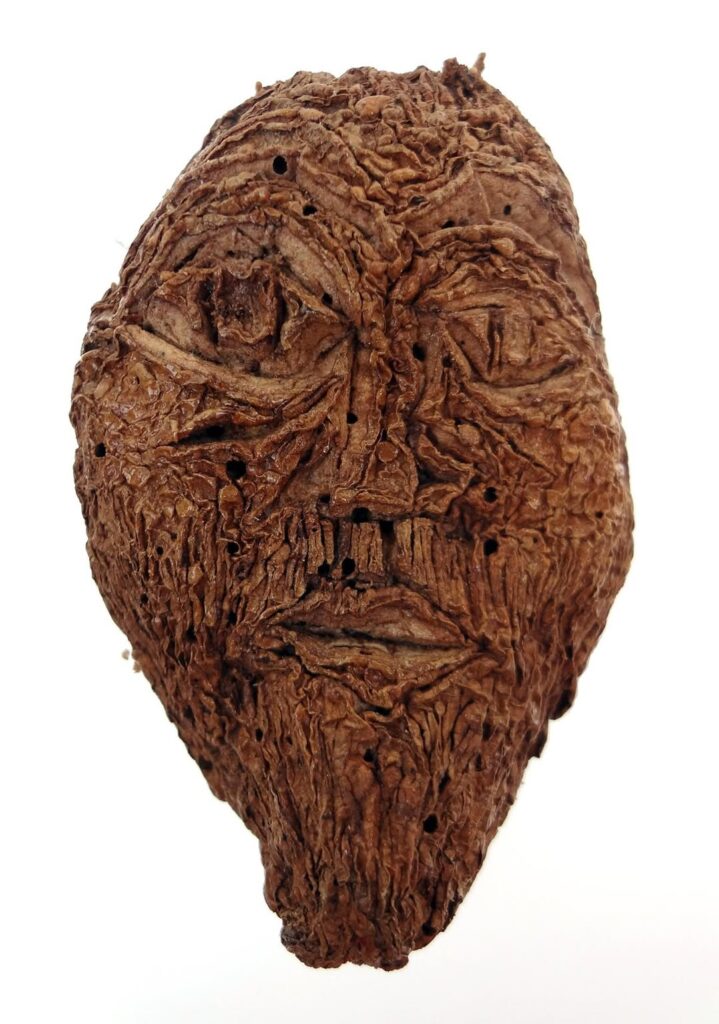
    Potato Auto-Portrait (2004) at Valentine Gallery May 24, 2014

    “Potato Auto-Portrait (carved in 2004-photo taken November 28, 2012)”
    dried potato
    dim. var. approx. 3 x 2 x 1.25 inches
    ©Jeffrey Allen Price

    My sculpture Potato Auto-Portrait was included in a review of the Dennis Oppenheim homage exhibition published by Hyperallergic.

    The reviewer wrote:

    “There is a third self-portrait in the show, along with Becket’s and Oppenheim’s, by Jeffrey Allen Price. A former assistant to Oppenheim, Price made his comic-Picassoid ‘Potato Auto-Portrait’ (carved in 2004), as the title states, ten years ago, and it has been shrinking ever since; consequently, this piece is also moving, albeit at a glacial pace.”

    One of the stranger qualities of working with potatoes as an artistic medium is that the artwork continues to transform long after it is completed.

    Read the full review here:

    Homage to Absurdity: The Restless Legacy of Dennis Oppenheim— Hyperallergic

  • Potato Excuses I & II (2004)

    I am full of excuses. Here’s a couple of good ones in a 51 second video from 2004. “My Plate is Full!,” and “I’ve Bitten Off More Than I Can Chew!”

  • Spuds Unwrapped

    The Food Network, Television Appearance, April 21, 2002

    Tonight I appeared on Food Network’s Unwrapped as part of a special potato-themed episode called Spuds Unwrapped. Seeing myself on national television talking about potatoes and performing was surreal. Host Marc Summers introduced me as a “Potato Artist” and called me “the potato’s number one fan.”

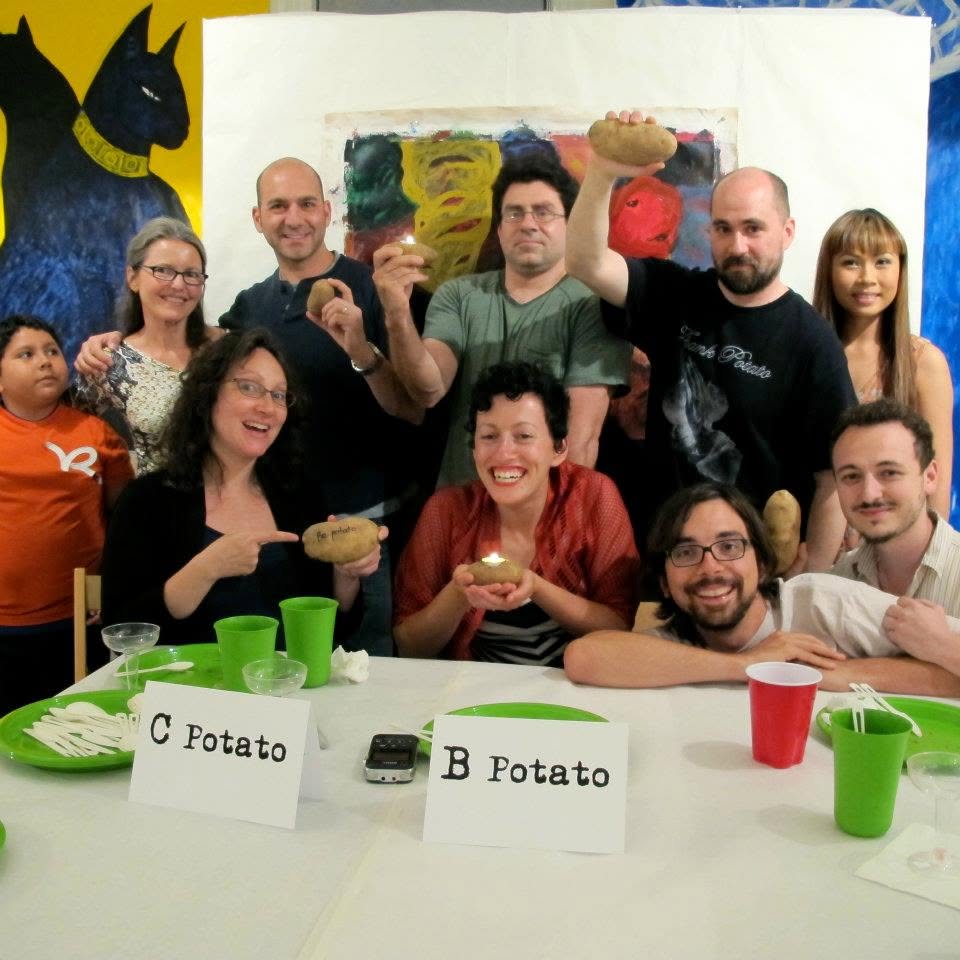
    The segment featured an installation of my potato collection, potato-themed artworks, and documentation from EMERGENCY PÖTATOFÊTE, a performance organized with fellow graduate students at Stony Brook University. The event had originally been scheduled around a planned Food Network visit in September 2001. Following the events of September 11, it was unclear whether the production would continue at all. The title EMERGENCY PÖTATOFÊTE reflected both that uncertainty and my belief that gathering people together through food, humor, and art felt especially important during that difficult moment.

    During the interview I talked about some of the reasons why I originally became interested in the potato, explaining:

    “I started finding all sorts of connections, anthropological connections, all around the world, folklore dealing with the potato. The global significance of the potato became something for me that I could attach to.”

    I also explained one of my favorite concepts:

    “The potato seems to be this unifying symbol of egalitarianism. I don’t know anyone who doesn’t eat potatoes.”

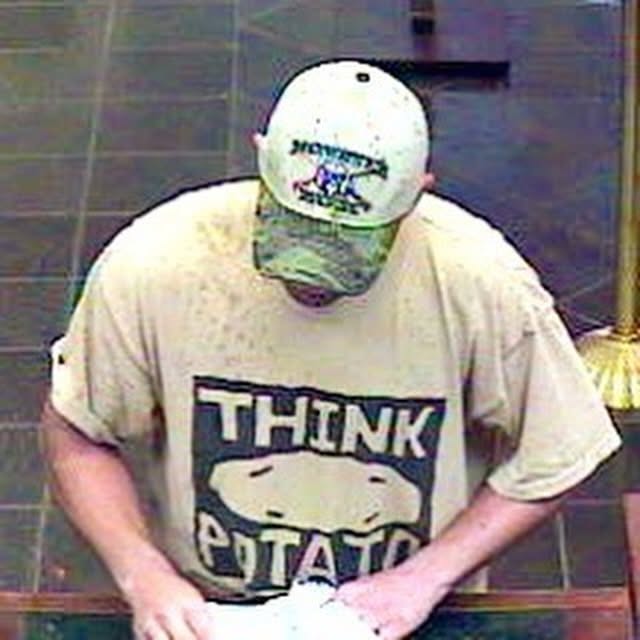
    The segment ended with Marc Summers holding one of the THINK POTATO t-shirts I had given him and saying:

    “Here’s one of Jeffrey’s works of art. Looks pretty cool.”

    Which made me laugh. Hopefully it might even lead to a few more sales of my potato t-shirt designs online.

    The potato continues to drive me and delight audiences. It has introduced me to people I never would have met, conversations I never would have had, and opportunities I never could have predicted. Tonight’s television appearance feels like the latest chapter in an ongoing project that keeps growing in unexpected directions. What began as a curiosity has somehow become a nationwide conversation

    .Related Timeline Entry:
    Featured on Food Network’s Spuds Unwrapped (2002)

    Related Documentation:
    • POTATOLAB (2002)
    • EMERGENCY PÖTATOFÊTE (2001)

  • Hainuwele: The Story of a Dema Girl

    October 16, 2001
    The Spot, SUNY Stony Brook, New York

    Last night I performed Hainuwele: The Story of a Dema Girl at The Spot as part of a drag performance event.

    The work was inspired by an Indonesian myth about a mysterious girl named Hainuwele. In the version of the story I encountered, Hainuwele possessed the unusual ability to pull useful objects from her anal cavity. The people around her became jealous of her gifts and eventually murdered her, chopping her body into pieces and burying them in the earth. From those buried remains grew cultivated plants and tubers, transforming Hainuwele into an agricultural ancestor whose death gave rise to food and culture.

    For the performance I wore a dress sewn from burlap and a long blonde wig. Combined with my long beard, the overall effect was something like a cross between Marilyn Monroe and a witch doctor. Hidden beneath the dress was a large cavity constructed from a plastic pumpkin. The pumpkin functioned as a stand-in for Hainuwele’s anal cavity and remained concealed until the performance began.

    As the Pixies song The Sad Punk blasted through the speakers, I lip-synced and moved across the stage while the lights flashed around me. During the performance I painted the word DEMA across my chest in large red letters.

    At key moments I reached into the hidden cavity and removed a series of objects: toy gold coins, cigarettes, candy, and other small gifts that I tossed into the crowd. These objects referenced the gifts Hainuwele produced in the myth. What begins as a strange miracle in the story eventually becomes the source of envy, violence, and transformation.

    Part of what attracted me to the Pixies song was the repeated scream of:

    “EXTINCTION!”

    The refrain echoed throughout the performance like a warning of what was about to happen. The song shifts between pop melody and violent punk energy, creating an atmosphere that felt unstable and increasingly ominous. Several audience members later described the performance as frightening.

    I was interested in the collision of mythology, drag, agriculture, ritual, humor, violence, and transformation. Hainuwele’s story suggests that food is never simply food. It carries memory, sacrifice, desire, jealousy, death, and renewal.

    For me, Hainuwele was an experiment in bringing an ancient agricultural myth into a contemporary performance setting. Whether the audience understood the myth or not, they were witnessing its central drama unfold: gifts emerging from the body, envy taking hold, and the promise that something new might grow from destruction.

    Hainuwele is often known as “The Coconut Girl” because of her miraculous birth from a coconut blossom. However, the myth ultimately explains the origin of cultivated tubers and other staple food crops, which emerge after her dismembered body is buried in the earth.